

Spring wrap 2025
A snapshot of the people and projects that shaped spring at The Quoin.

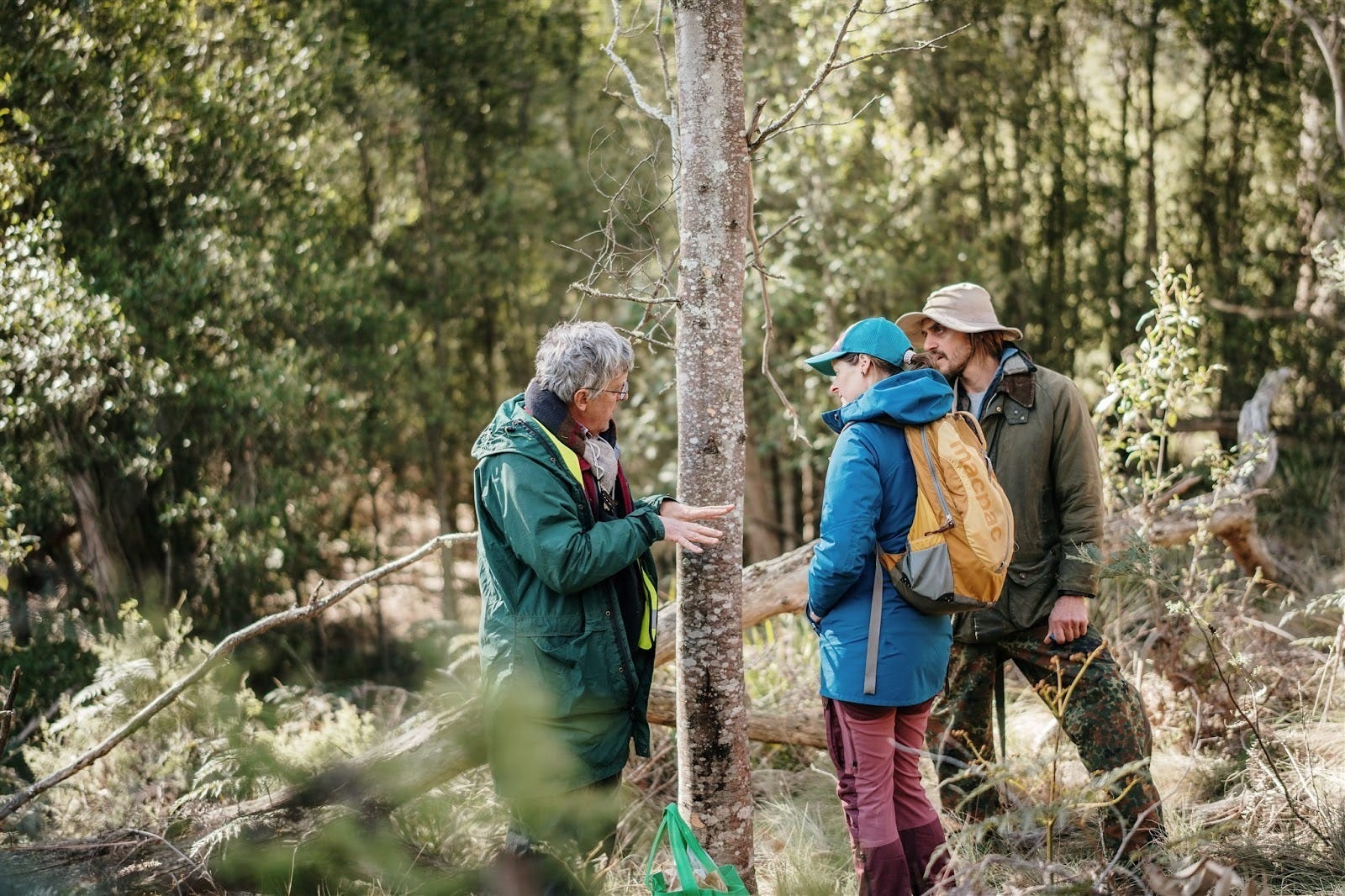
Spring left clues everywhere. Joeys began emerging from their mothers’ pouches, our property manager Andrew confirmed a breeding pair of wedge-tailed eagles were using the nest at Penny Hill, orchids scattered colour across forest floors, and tiny flowers unfurled on plants so small you had to kneel to see them. But The Quoin is nothing if not unpredictable, and amid those early signs, an October morning brought a brief fall of snow. Most flakes melted before they hit the ground, though a few held on long enough to catch on leaves.
Throughout the season, as the weather flaunted its range and young animals tested their legs, we prepared for the summer bushfire season, tackled weeds between bouts of wind and rain, and continued experimenting at Stocker’s Bottom. This wrap offers a snapshot of the people and projects that shaped spring at The Quoin.
Spring visitors
We welcomed back Dr Liz Znidersic and her field assistant Chloe Frick as they continued work on Liz’s world-first acoustic restoration study, which uses sound to measure ecosystem recovery and encourage birds to explore suitable habitat.
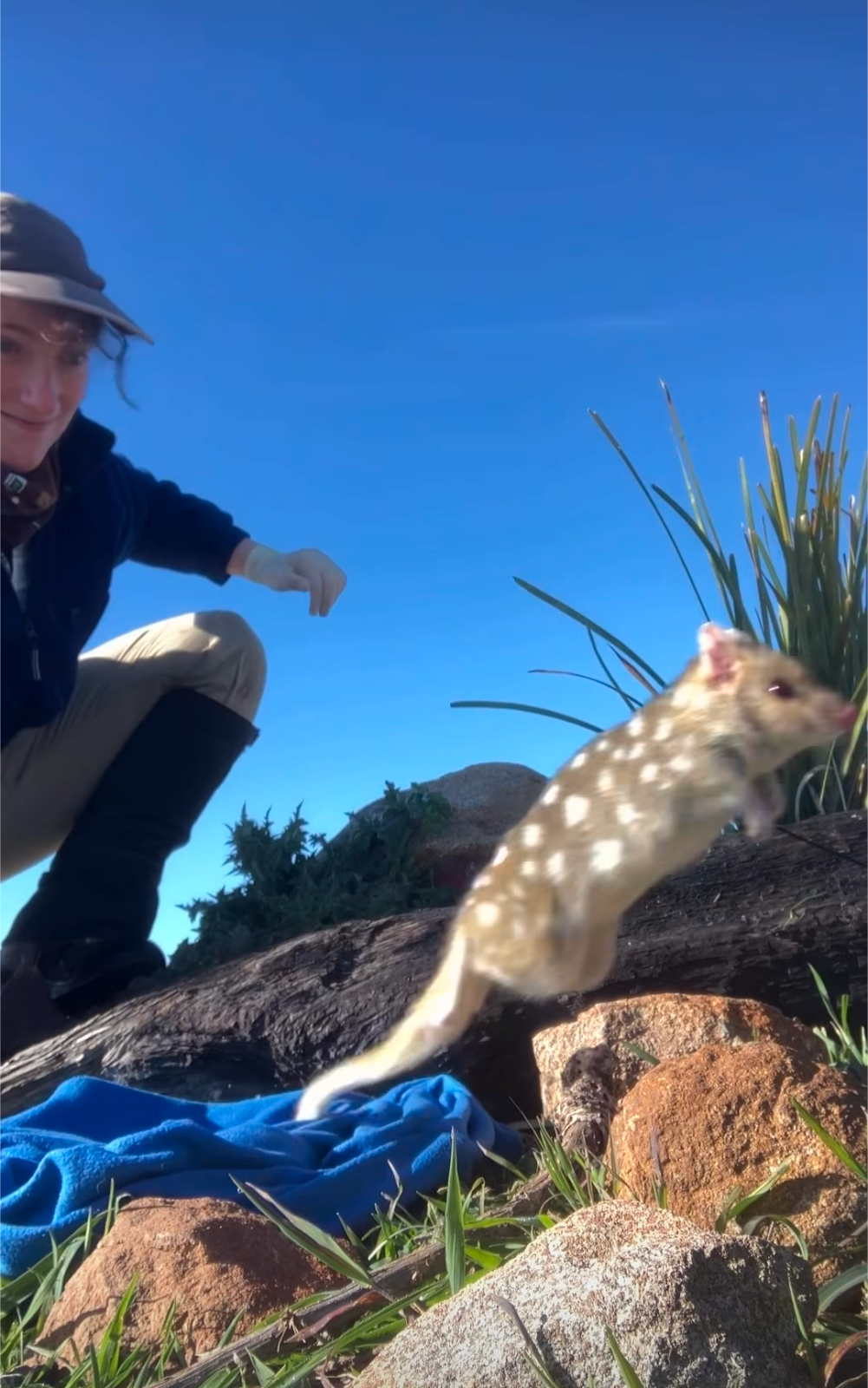
The quoll translocation team spent several mornings and evenings trapping juveniles as they emerged from their dens. Seven litters were born from the 24 eastern quolls released in February, and with each joey potentially having a different father, the team aimed to catch as many as possible to understand genetic diversity. They’re hopeful they’ll see a mix of wild and translocated parentage.
The University of Tasmania (UTAS) NatureScan team returned too, undertaking further biodiversity mapping as part of a project using consumer-grade drone data to assess how landscapes respond to restoration and management.
We also welcomed many first-time visitors — always enjoyable, because it lets us see the property anew through their eyes.
Members of the Australian Environmental Grantmakers Network (AEGN) joined us for a field trip. It was rewarding to both share our work and to hear more about the great work other philanthropic foundations are doing for nature. We also had the opportunity to properly trial the new sandstone escarpment track we built in winter.
Indicium Dynamics’ Mike Ross and Tahnee McShane joined us for a half-day at Honeysuckle Flat, helping us to complete our vegetation islet planting work.
And 12 scientists from the Tasmanian Museum and Art Gallery (TMAG) spent a week at The Quoin as part of their Expedition of Discovery program, which has been documenting the biodiversity of Lutruwita/Tasmania’s under-surveyed landscapes since 2017. For five days, botanists and zoologists spread across the property from early morning until dusk. Some walked kilometres into grasslands and rocky rises, while others joked that they barely made it past the utes, finding plenty to study within metres.
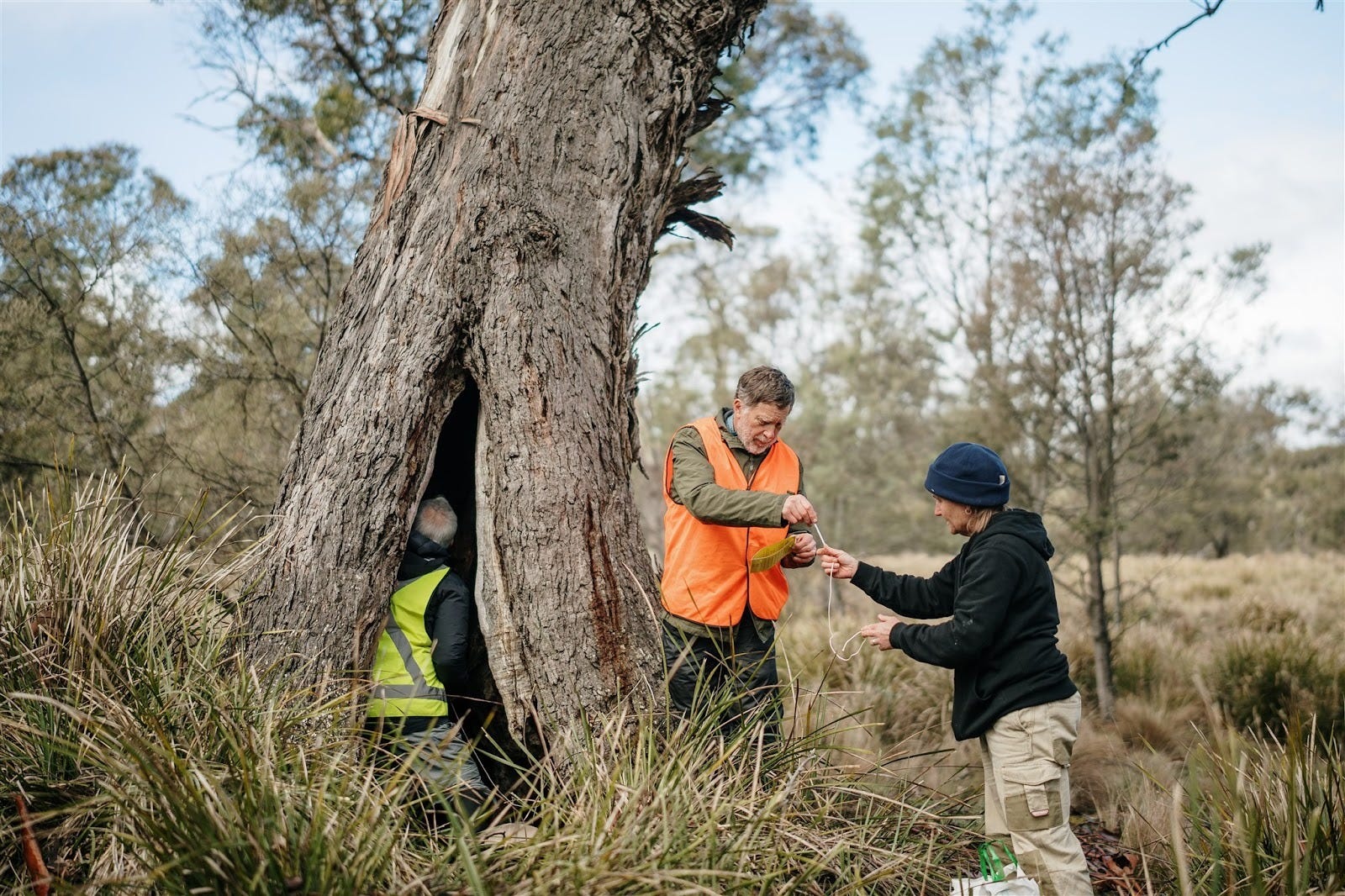
In the evenings, the team returned to a temporary lab, sorting, preserving and cataloguing specimens long into the night. Their work now continues offsite, as they identify species and assess what each one reveals about the landscape — whether it’s new to science, new to the region, offers a hint about the broader ecosystem, or is simply a good addition to TMAG’s collections.
We were able to shadow the scientists each day, learning from them as they surveyed the property. From mosses, lichens and fungi to freshwater snails and flies, every scientist brought their own lens, which meant each day brought invaluable new insights and perspectives.


Fire management
The spring season at The Quoin generally isn’t suited to ecological burning, so our fire work focused on preparing for next autumn. By selecting and readying areas now, we can act quickly when safe burn conditions return.
We also continued cutting and maintaining firebreaks ahead of the bushfire season, carried out significant tree care where debris had built up around trunks, and ran through equipment, communications and evacuation procedures to strengthen our readiness.
Weed management
Wind and rain made weed work a study in flexibility. When weather windows opened, we focused our efforts on a 20-hectare foxglove infestation, and continued our cut-and-swab gorse control near The Quoin Cottage and horehound treatments at Stocker’s Bottom.
We also surveyed several of our threatened native vegetation communities. Most areas were free of problematic weeds — a win in itself — and the time spent on the ground was equally valuable, giving us a clearer sense of what these communities look like in practice, not just on paper.
Honeysuckle Flat restoration project
Early in the season, we completed planting all 72 vegetation islets — a major milestone in this long-term restoration project.
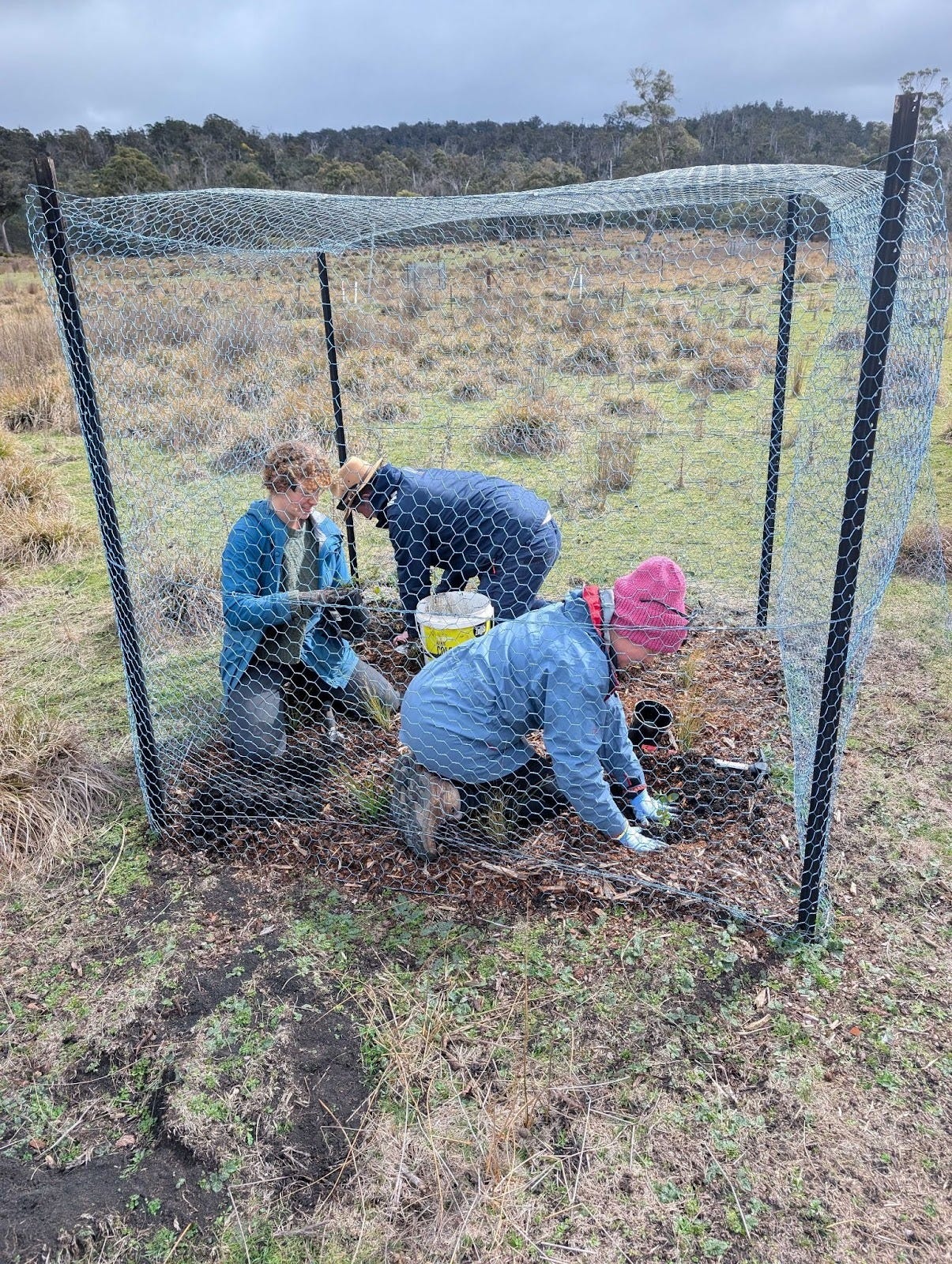
Once planting wrapped up, we shifted to maintenance and replacement mode. Some autumn plantings, particularly the acacias, struggled over winter with dieback and some deaths. We replaced dead tubestock and trialled small improvements: biochar in and around planting holes, tree guards for shelter from the elements, and the addition of nearby forest soil to speed up the colonisation of local invertebrates, bacteria and fungi.
Not everything thrives straight away in an open landscape like this. But each setback fine-tunes our next round of decisions, and many species — including woolly tea tree and snow gums — are already thriving. Ultimately, restoration projects are a long conversation with the land, and we’re only just getting to know each other.
Stocker’s Bottom micro-experiments
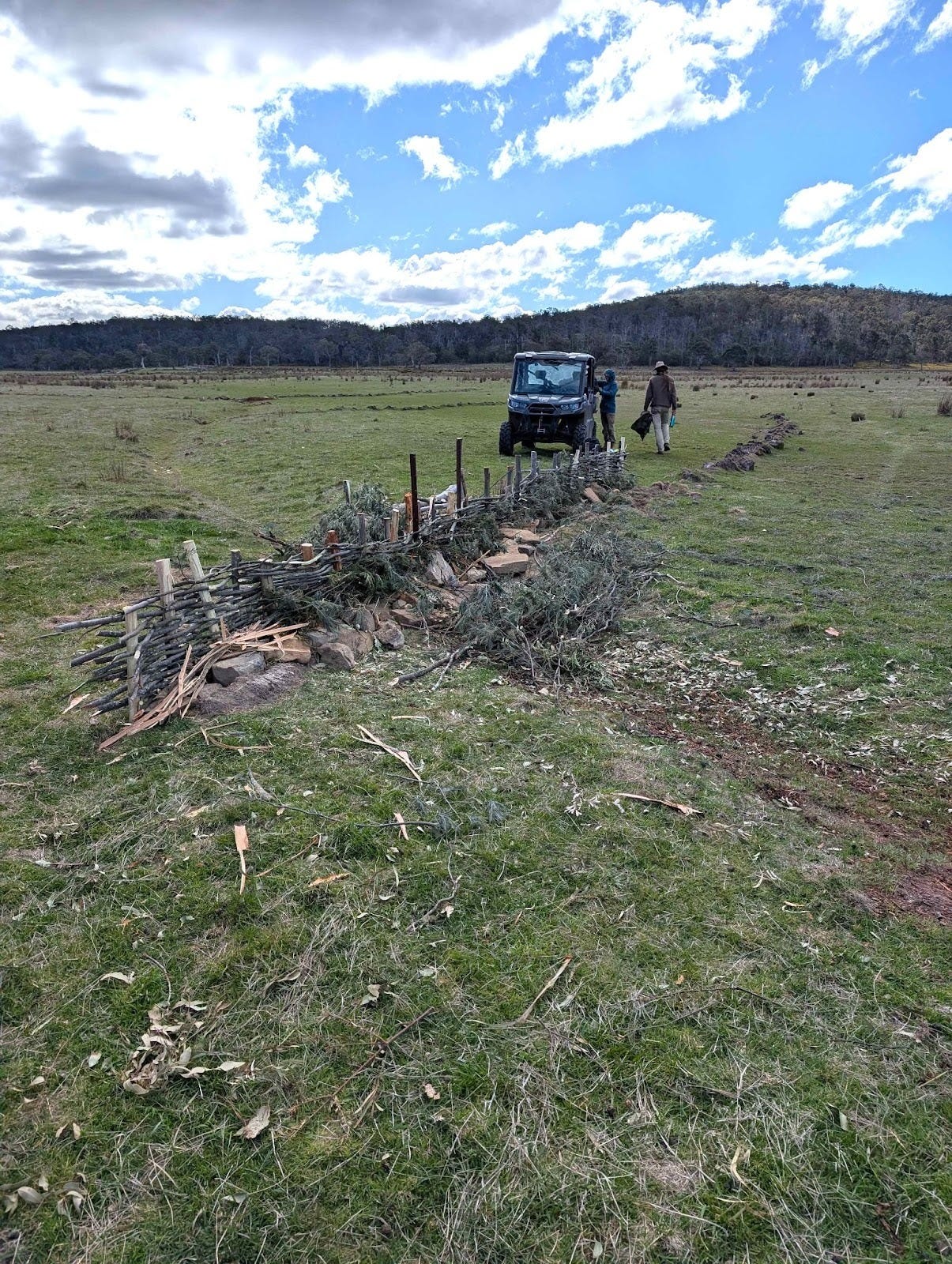
Our micro-experiments at Stocker’s Bottom continued with a new round of leaky weir designs aimed at slowing water and rehydrating the floodplain, as well as creating microhabitats in a smooth, heavily tilled area.
Using the tractor, we cut 600-millimetre-deep rip lines radiating outward from an existing weir. After a significant rain, we spotted frogs sheltering in the rip lines, and found that the channels held even more water than expected — both promising early signs. We then added extra rock to strengthen the structure and increase surface texture.
We also built an extra-large weir, three times the length of previous designs, and added rip lines there too. This structure was fronted with rock, flanked by habitat piles and stitched together with pockets of shade and shelter. When we checked a week later, the entire structure was streaked with bird droppings — another strong indicator that as we continue to create habitat in this landscape, animals will quickly return in kind.
Thinking ahead to summer 2026
This summer, we’ll continue infrastructure upgrades, including finishing the construction of our new storage shed. We’ll keep moving on weed control — spraying creeping thistle, hand-pulling wild mignonette, ragwort, mullein and foxglove, and cutting and painting gorse near buildings. We’ll deploy 20 camera traps for our annual summer wildlife survey, adding another year to a dataset now spanning four summers. And, we’ll carry out more drone monitoring of the Honeysuckle Flat vegetation islets in late February to track growth and survival.
As temperatures rise, snakes will take advantage of sunny spots around fallen logs, insect activity will pick up across the grasslands, and juvenile quolls will start venturing out at night. We’ll be there to monitor, learn and adjust our work as the season unfolds.
All images credited to The Quoin team unless otherwise indicated.
This article was written by: Bronte McHenry
And edited by: Andrew Rettig, Karina West and Lisa Miller

The Quoin is a living laboratory, where we develop and deploy technologies, products and practices to accelerate regeneration at scale.
If you’d like to collaborate, please get in touch.
And to follow more of our nature-positive work, please subscribe to Wedgetail’s newsletter.

Impressive docmentation of adaptive habitat work. The Stocker's Bottom leaky weir iterations are especially valuable becuz they show restoration as actual experimentation, not just implementation of known solutions. The bird droppings as biofeedback is a surprisingly practical metric, tho it'd be intresting to see if that accelerates nutrient cycling and soil buildup in ways that reinforce the structure longterm.
Great work - I loved reading about the different restoration techniques. "Having a conversation with the land" is a good description.